INDIE 101: A look at Montréal’s incomparable independent music scene

Montréal has long been a hotbed of artistic expression, and next to its award-winning film industry and busy gallery schedule spotlighting works by local artists, the city’s independent music scene has captured the world’s attention since the 1990s. And with the release of filmmaker Chandler Levack’s Mile End Kicks—the tale of a young music critic’s coming of age in Montréal—the local indie scene is primed for all-new exposure.
Back to the roots of Montréal’s indie scene

If the scene has a spiritual forefather, his influence is not only easy to hear on the city’s music but also looms multiple-stories high in two huge tribute murals. One of the city’s most celebrated prodigal sons, Leonard Cohen lived life as an artist who never once compromised his artistic vision. He proved to Montréal’s musicians in this unique bilingual enclave with long winters that not only is anything possible, but that people the world over are listening.
While it’s impossible to encapsulate everyone who’s made worthwhile music in the city, we hope this humble guide not only covers the basic rough timeline of MTL Indie’s progression but also serves as a primer prompting further exploration. Our definition of “indie” also isn’t specific to sound, but rather an ethos of DIY originality and spunk. On any given night, the next round of future influencers are performing in one of the city’s stellar independent music venues and the best way to discover them is here in the crowd with us. Where possible, we linked to each artist’s Bandcamp page, the easiest way to take a listen or make a purchase!
(Tune into the MTL Indie playlist on Spotify to listen while you read!)
A quick glance at the 1990s

In 1988, local upstarts GrimSkunk burst on the scene with their unique combination of punk and international influences with their self-defined genre “world punk,” in the process launching Québec’s “alternative” scene (although credit is also due to legendary metal act Voivod who laid some heavy groundwork throughout the 1980s). Throughout the following decade, Montréal’s streets buzzed thanks to groups like Tinker, whose Melissa Auf Der Maur joined Hole in 1994 and then The Smashing Pumpkins later in the decade, experiences she wrote about in her autobiography Even the Good Girls Will Cry: A ‘90s Rock Memoir published in 2026. Concurrently, Bran Van 3000’s surprise hit ‘Drinking in L.A.’ saw them tour around the world alongside Björk and Massive Attack.
Meanwhile, Rufus Wainwright, the unstoppable offspring of Kate McGarrigle of local legends Kate & Anna McGarrigle and Loudon Wainwright III, was thrilling audiences with his unique mix of indie folk, cabaret, and opera at a weekly show at Café Sarajevo. In no time, the major labels came calling. His sister Martha Wainwright has achieved similar worldwide fame suggesting there must be something in the water by the Wainwright homestead.
And while Rufus delivered classic sit-down songcraft, bands like The Sainte Catherines—who took their namesake from one of Montréal’s biggest shopping streets and then poked snotty fun at those milling around the boutiques and cafés—and Me Mom and Morgentaler, who were active on the frontlines of the HIV-AIDS crisis in the city, kept the kids entertained and educated until things took a turn into something else entirely.
Enter Godspeed
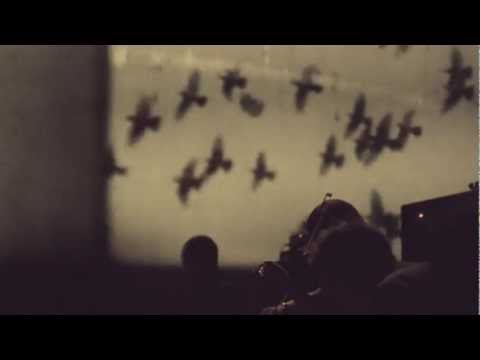
Over brooding drone, a voice speaks: “The car is on fire, and there’s no driver at the wheel.” With these words, the collective known as Godspeed You! Black Emperor opened their debut album F♯ A♯ ∞ and transformed the face of indie music in Montréal. Released on lovingly hand-packaged vinyl with photographic prints, a wax paper manifesto and a penny flattened on the rails by the group’s home base in the Mile End neighbourhood, GY!BE created a mysterious persona they’ve maintained to this day. Still going strong, the group’s most recent album “NO TITLE AS OF 13 FEBRUARY 2024 28,340 DEAD” was released in 2024.
Signed to the aptly named Constellation Records, a group of like-minded groups filled loft performance spaces and old factories like the Fonderie Darling, building a Montréal mystique hand-in-hand with defiantly DIY ethics. Groups like Fly Pan Am, 1-Speed Bike, Hangedup, Exhaust and Godspeed offshoot Thee Silver Mt. Zion all emerged fully formed.
Poster artists like Seripop created a visual language all Montréal’s own. You may not have always been able to read the when-and-where details for the shows advertised, but word of mouth got you where you needed to be. And more than two decades on from F♯ A♯ ∞, the scene Godspeed and Constellation cultivated continues, still releasing bespoke screen-printed records by experimenters like Erika Angell, FYEAR, Steve Bates, T. Gowdy, JOYFULTALK, Kee Avil, Automatisme, Jerusalem In My Heart (AKA producer Radwan Ghazi Moumneh), Jessica Moss and Esmerine with no sign of slowing down.
After the (Arcade) Fire

Not going to lie—winters in Montréal are powerful. That doesn’t mean we all just hibernate indoors, but winter has always inspired the art made here and with their 2004 debut album Funeral, Arcade Fire unleashed a rollicking ode to life, death and snow. With the weather-appropriate lyrics, “If the snow buries my neighourhood […] I’ll dig a tunnel from my window to yours,” this band of local misfits took flight in opener ‘Neighbourhood #1 (Tunnels)’ and didn’t let up for the next 48 minutes. Recorded at Hotel2Tango, a now legendary studio under the guiding hand of producer Howard Bilerman, Arcade Fire found the middle ground between GY!BE’s stately orchestrations and chest-beating indie rock.
The floodgates opened and a multitude of bands gained near-instantaneous world-wide acclaim, international magazines and websites pitching Montréal as the next “It” City. Some lasted but a heartbeat—the sorely missed The Unicorns and Witchies both called it quits far too early. Others have lasted years, building celebrated discographies and keeping the MTL flames burning including The Besnard Lakes, The Dears, Stars, Plants & Animals, Islands, The Barr Brothers, Patrick Watson, Wolf Parade (and side-projects Sunset Rubdown and Handsome Furs), Metric, Suuns, Half Moon Run and Land of Talk. Other tested-and-true artists like Basia Bulat, Michael Feuerstack (AKA Snailhouse) and Tegan and Sara re-located to the city and their music’s never been the same.
French language acts also entered a renaissance period, with artists like the dreamy Cœur de Pirate, Malajube (whose break-out single ‘-40°C’ is yet another ode to Montréal in winter), and Polaris Prize winners Karkwa expressing Montréal living en français. Other French-language acts your ears will love include Safia Nolan, Charlotte Cardin and Peter Peter.
An Electronic Shift

While guitar-led bands ruled throughout the 2000s, things took a turn away from six strings towards electronic beat-driven dance-alongs open for everyone. Early adapters like the monumental queercore collective Lesbians on Ecstasy, the beachy (with swirling harmonies that could make the Beach Boys swoon) Miracle Fortress, punk-funk weirdos Les Georges Leningrad, the raucous Duchess Says fronted by the unstoppable Annie-Claude Deschênes (still rocking audiences with her new group PyPy), icy synth-pop duo Brusque Twins, the frisky pranksters Chromeo, and the incomparable tUnE-yArDs (and Sister Suvi before them) led the way for Montréal’s next indie evolution.
Born Clare Boucher, Grimes appeared on the scene in 2010 with a pair of debut albums, Geidi Primes and Halfaxa. Signed to influential UK label 4AD (responsible for The Cocteau Twins and The Pixies amongst others), Grimes set local trends and Montréal answered the call. Introspective electronica groups like Braids (and side project Blue Hawaii), Milk & Bone, Majical Cloudz, Purity Ring, and the pop chameleon Sean Nicholas Savage came to represent the sound of the city, while Yamantaka // Sonic Titan’s “psychedelic noh-wave opera” kept things beautifully weird, showing off the city’s wide listening habits. And where Constellation came to represent the 2000s, upstart labels like Arbutus Records did the same for the 2010s.
Free for all

Where to next? As the definition of “indie” itself expands, Montréal’s homegrown music scene does the same in return. Soundscape sculptor Markus Floats creates audio realms easy to lose yourself in, while Marlaena Moore borrows equally from old-school songstresses and indie rock and Unessential Oils updates the smooth light rock sounds of ‘70s AM radio for the 2020s. Experimental reed instrumentalist noisemakers Treffpunkt and 5ilience are bringing contemporary music to the indie underground, while Laura Kreig’s cold wave brutalist pop has seen her tour throughout the world.
Polaris Music Prize winning underground hip-hop notaries Cadence Weapon (who spits rhymes of love for his old Montréal neighbourhoods on tracks like ‘My Crew (Woooo)’), horrorcore leader pace-setter Backxwash, and producer extraordinaire Kaytranada (who’s setting beats for the biggest names in the game) have all called Montréal home too.
And speaking of the Polaris, the prize’s only two-time winner Jeremy Dutcher creates indigiqueer epics unlike any other, and his fellow prize recipient Pierre Kwenders’ blend of globe-trotting sounds is helping write a new musical language (and why not, as he’s already fluent in four) both on record and at his Moonshine dance party series, secret locations revealed by SMS the night of. Groundbreakers like Cindy Lee, whose ghostly girl group sounds under a wash of distortion top critic’s lists and pack out big theatres, the incognito party jammers Angine de Poitrine, Elle Barbara whose Word on the Street was released by the influential indie label K Records, Japanese-Canadian psych-rockers TEKE::TEKE, introspective harpist and arranger Justin Karas, and pianist Laurie Torres are transforming stages with all new expressions of local sound. Finally, keeping volumes high and audiences thrilled, the likes of Faze, Ribbon Skirt, knitting, Sunforger, DahL, Sasha Cay, Prism Shores, Shunk, Blooming Season, Dresser, girl with dream, Preoccupations, Béton Armé, Conifère and Phobocosm prove that rock, punk, post-punk and metal still hold their place in Montréal.
Groundbreakers like Cindy Lee, whose ghostly girl group sounds under a wash of distortion top critic’s lists and pack out big theatres, Elle Barbara whose Word on the Street was released by the influential indie label K Records, Japanese-Canadian psych-rockers TEKE::TEKE, introspective harpist and arranger Justin Karis, and pianist Laurie Torres are transforming stages with all new expressions of local sound.
And trust us, there’s way more where all that came from.

Mark Hamilton
Mark Hamilton is the community director for QueerMTL, a musician in the projects Woodpigeon, Frontperson and Brittle Dreams and a curator and historian specializing in LGBTQ+ activism and zinemaking. He’s lived in Montréal since 2015, during which time he’s most often spotted atop a BIXI bike usally running a few minutes late.